
Uncategorized

Guardians of Clarity: Pancake Lenses and UV-C Light

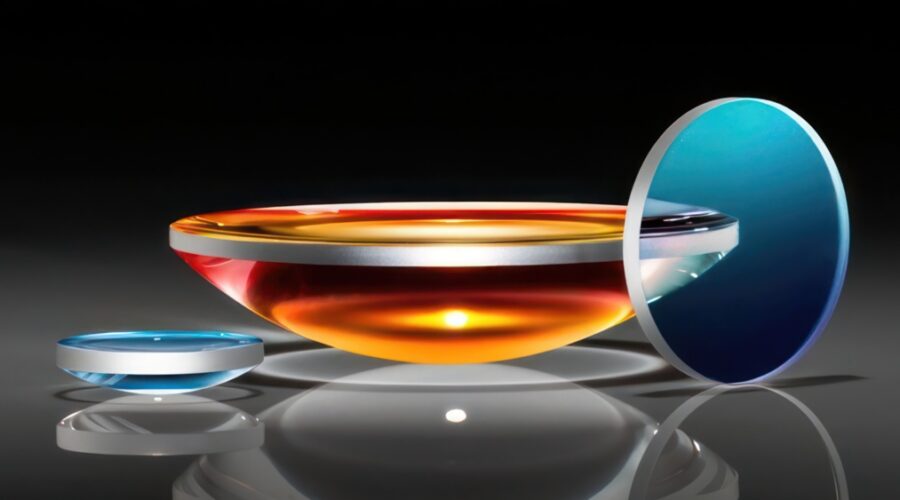
In the rapidly evolving landscape of virtual reality (VR) technology, the quest for visual excellence is paramount. Pancake lenses, with their compact design and wide field of view, are fast becoming the future of immersive VR experience. However, as we venture into the intricate realm of optics, a pertinent question arises: How do these guardians of clarity fare against the invisible force of UV-C light?

While UV-C light seldom encounters the human eye directly in natural settings, its potency cannot be underestimated. In controlled environments, UV-C finds purpose in disinfection, eliminating harmful micro-organisms with unparalleled efficiency. Yet, this very potency raises questions about its potential effects on optical components, particularly lenses. Pancake lenses, meticulously crafted to optimise visual fidelity, now face the challenge of accommodating UV-C’s energetic onslaught. Understanding this interaction is crucial, not only for preserving lens integrity, but also for ensuring the longevity of virtual reality devices in environments where UV-C exposure may occur. In this context, the resilience of pancake lenses against UV-C light becomes a testament to the precision and durability of modern optics.

Pancake Lenses Demystified: Unravelling Their Inner Workings

Pancake lenses stand as the unsung heroes of visual technology, encapsulating a world of precision engineering within their compact frames. To truly appreciate their prowess in the realm of virtual reality, we must embark on a journey to understand the intricate mechanisms that define their functionality.

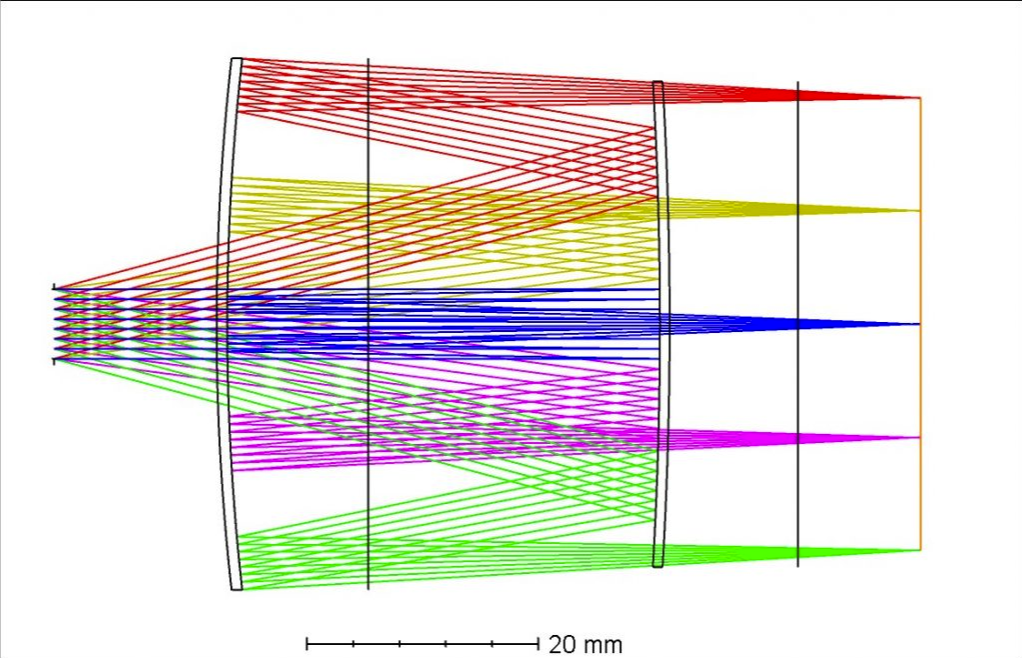
A pancake lens works by using the principles of optics to focus light onto a sensor or our eyes. One important aspect of how it achieves this is through internal reflection

Inside a pancake lens, there are carefully shaped pieces of glass. These pieces are designed in a way that when light enters the lens, it’s bent or refracted. This bending is crucial because it helps gather and focus the light. But here’s where internal reflection comes into play. Some of the light inside the lens hits the surfaces of these glass elements. Instead of passing through, this light bounces off the surface. This is called internal reflection.

By carefully designing the shape and angles of these glass elements, engineers can control how the light bounces around inside the lens. This helps in making sure that all the rays of light are focused precisely, resulting in a clear and sharp image. The precise arrangement of glass elements and controlled internal reflection within a pancake lens enables the lens to achieve a thinner, more compact design, optimising its functionality without compromising optical performance.
 

UV-C Penetration and Lens Materials:
Unveiling the Barrier

Having illuminated the extraordinary capabilities of pancake lenses in revolutionising the virtual reality experience, it’s imperative that we now turn our attention to an equally crucial facet – their interaction with UV-C light. Just as these lenses stand as paragons of optical engineering, their resilience against the potent force of UV-C radiation is a testament to the precision and thoughtfulness embedded in their design. The penetration rate of UV-C into these materials, particularly glass, is a critical aspect that shapes the lens’s ability to protect itself against the energetic force of UV-C radiation.

The Nature of UV-C Penetration:

UV-C light, characterised by its short wavelengths, possesses a unique ability to interact with matter. These high-energy photons have the potential to penetrate certain materials, altering their molecular structure. However, the extent of penetration is contingent on various factors, including the material’s composition and density.

Glass as a UV-C Barrier:

Glass, commonly employed in the construction of high-quality lenses, boasts impressive UV-C blocking properties. Its dense molecular structure provides an effective barrier against UV-C penetration. This characteristic is fundamental in safeguarding the interior components of pancake lenses from potential harm.

Coatings and UV-C Absorption:

Beyond the inherent properties of glass, lens manufacturers often employ specialised coatings to enhance UV-C protection. These coatings are meticulously formulated to absorb UV-C radiation, further fortifying the lens against potential penetration. Through a combination of material selection and advanced coatings, pancake lenses are equipped with formidable defences against UV-C light.

Controlled Dispersion and UV-C Deflection:

Aspherical elements, integral to many pancake lens designs, play a crucial role in UV-C protection. Their precisely calculated shapes are engineered to redirect light rays. In the context of UV-C, as it is not part of the visual spectrum, these elements help disperse the radiation, preventing it from concentrating and penetrating deeper into the lens material.

Conclusion

In conclusion a reassuring revelation emerges: it is indeed safe to utilise UV-C disinfection on pancake lenses. UV-C, with its potent germicidal properties, poses minimal risk to these optical marvels. The unique design and materials of pancake lenses, coupled with their inherent ability to absorb UV-C, make them resilient against any potential harm. By harnessing the power of UV-C for disinfection, we not only safeguard the lenses from potential contaminants but also ensure a clean and hygienic VR experience.
Illuminating Immersion: UV-C’s Impact in Virtual Reality – Uncovering Risks and Benefits

Introduction

In recent years Virtual Reality (VR) has evolved from a niche technology to a mainstream phenomenon, captivating users with immersive digital experiences that blur the boundaries between the real and the virtual. As the demand for more lifelike and engaging VR content surges, so does the need for addressing the crucial aspect of hygiene within this dynamic realm. Enter Ultraviolet-C (UV-C) technology, a potent and versatile tool that is revolutionising the way we approach cleanliness and sanitisation in virtual reality.

UV-C, a short-wavelength ultraviolet light with germicidal properties, has long been recognised for its efficacy in sterilisation and disinfection applications in various industries. Now, its remarkable potential in elevating VR experiences through improved hygiene standards is taking centre stage. In this article, we delve into the pivotal role of UV-C in VR, focusing on its ability to transform the way we perceive and maintain hygiene within virtual environments. From sterilising VR equipment to mitigating the risks of shared experiences, UV-C technology is paving the way for a cleaner, safer, and more enjoyable virtual reality landscape. There are of course risks when implementing UV-C technology and in the article we explore both the benefits and risks involved when using UV-C as well as offering guidance on how to minimise any potential risk that may come from using a UV-C product.

Understanding UV-C

Understanding UV-C (Ultraviolet-C) involves exploring the intriguing world of short-wavelength ultraviolet light, a powerful and unique form of electromagnetic radiation. Falling within the 100 to 280 nanometer range, UV-C possesses exceptional germicidal properties, making it an effective tool in the battle against harmful microorganisms. The key to UV-C’s potency lies in its ability to disrupt the DNA and RNA of bacteria, viruses, and other pathogens, rendering them unable to reproduce and thus neutralising their harmful effects. This property has led to the widespread application of UV-C in various industries, including water and air purification, healthcare, and food processing. In recent times, UV-C has also found its way into the realm of Virtual Reality (VR) and Augmented Reality (AR), where its benefits extend beyond mere sterilisation. UV-C technology is being harnessed to improve the hygiene of VR equipment, ensuring a safer and cleaner user experience. However, it is crucial to recognise that UV-C exposure poses potential dangers to living organisms, including humans. As we integrate UV-C into the realm of VR and AR, a balanced understanding of its capabilities and limitations becomes essential to harness its power effectively and responsibly.

History of UV in VR / AR

In the mid-2010s, the first instances of UV-C implementation within Virtual Reality (VR) emerged as companies and researchers explored its germicidal potential. An early example was the introduction of automated UV-C cleaning stations in VR arcades and public VR spaces. These stations allowed users to disinfect VR headsets and controllers between sessions, minimising the risk of infections spreading among different users. This was of course pre-covid.

The Virtual Reality (VR) industry experienced a significant negative impact due to the COVID-19 pandemic. Before the outbreak, VR arcades, amusement parks, and entertainment venues were thriving, offering consumers a chance to experience VR in a social and interactive setting. However, with strict social distancing measures and lockdowns in place, these public VR spaces faced closure, leading to revenue losses and business uncertainties. The fear of potential virus transmission through shared VR equipment deterred many customers from visiting these establishments, further exacerbating the industry’s struggles. Consequently, VR arcade operators and businesses had to adapt rapidly to the changing landscape, investing in rigorous sanitisation protocols, implementing UV-C disinfection systems, and adhering to strict hygiene standards to regain public trust. Despite the challenges, the resilience of the VR industry and the implementation of UV-C technology played a vital role in the gradual recovery of public VR spaces, fostering a safer and cleaner environment for users eager to experience the joy of VR in shared settings once again.

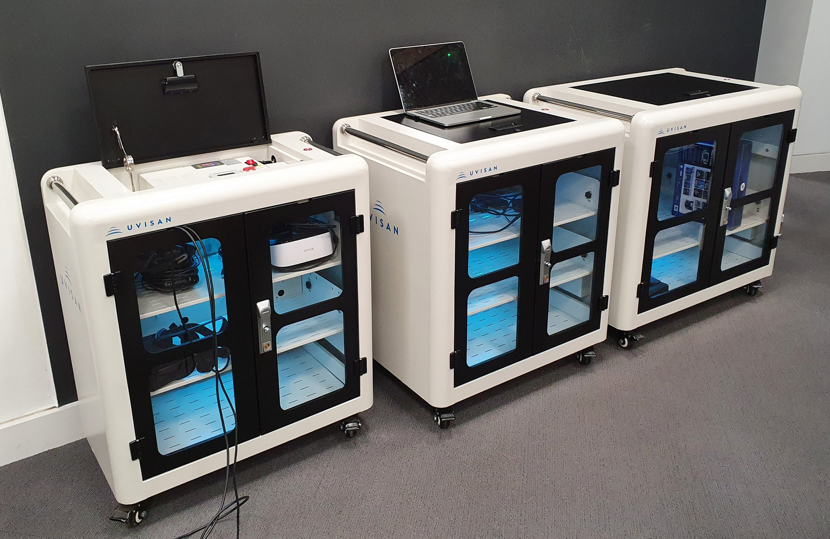
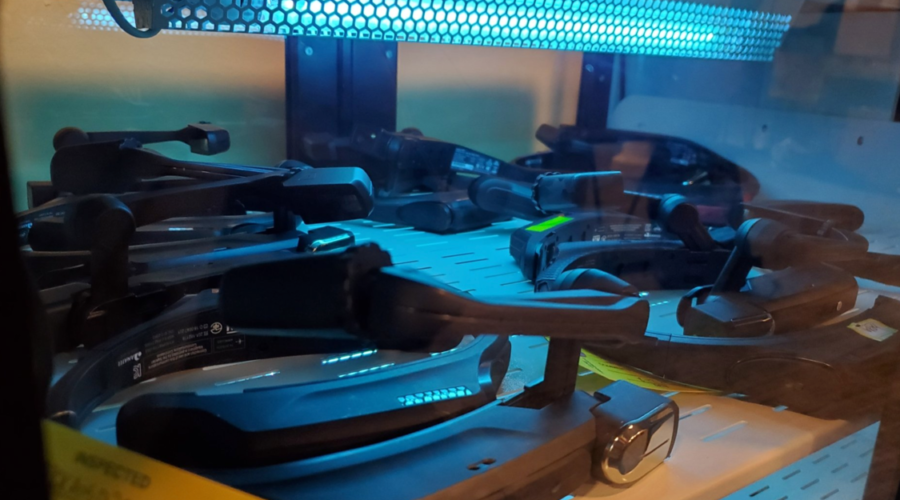
Post-covid saw the popularity of UV-C technology really skyrocket with the adoption of UV-C disinfection systems like Uvisan cabinets. Uvisan cabinets, equipped with powerful UV-C lamps, offered an automated and efficient way to sanitise VR headsets and importantly, also controllers between users. These cabinets used UV-C radiation to deactivate harmful pathogens, ensuring a clean and safe experience for each participant. These pioneering applications showcased the potential of UV-C technology to revolutionise VR hygiene, providing users with a worry-free, germ-free, and highly enjoyable virtual experience. Suffice to say, whilst Covid may have been the catalyst for UV-C technology becoming so popular within VR / AR, it has now gone far beyond that, with hygiene itself being the focal point more generally, as opposed to Covid specific prevention.

Benefits of UV-C in VR / AR

One of the most significant advantages of UV-C is its powerful germicidal properties, which make it highly effective in disinfecting VR equipment and accessories. Automated UV-C cleaning systems, such as Uvisan cabinets, provide a quick and efficient way to sanitise VR headsets, controllers, and other shared accessories, reducing the risk of cross-contamination in public VR spaces. By eradicating harmful pathogens, UV-C ensures a safer and more hygienic environment for users, instilling confidence in their virtual experiences. Moreover, UV-C technology helps to extend the lifespan of VR equipment by keeping it free from harmful microbes without the need for chemicals and mechanical cleaning, leading to cost savings and reduced equipment maintenance. The implementation of UV-C in VR/AR not only elevates the overall hygiene standards but also contributes to a more enjoyable and worry-free immersive experience for users, ultimately advancing the adoption and growth of these transformative technologies.

In the vast expanse of virtual possibilities, UV-C and VR appear to be the ideal pairing, their stars aligned. However, as with any celestial match, there are cosmic concerns to navigate. UV-C, while incredibly beneficial, carries its share of hazards. Integrating UV-C into VR establishments, or any industry for that matter, demands a comprehensive understanding of the risks involved. Selecting UV-C equipment requires careful consideration, ensuring it meets stringent safety standards and is equipped with proper shielding measures to protect users from its potent radiation. Before embracing the union of UV-C and VR, it is crucial to recognise the importance of responsible implementation and the vigilance required in safeguarding the well-being of those venturing into the virtual realms.

Dangers of UV-C

UV-C, despite its remarkable benefits, presents a range of potential dangers that must be addressed with utmost care and attention. When handled responsibly, these hazards can be effectively managed to ensure the well-being and safety of users. However, any missteps in implementation could result in severe risks to health and safety.

The Harmful Impact of UV-C on Our Eyes

Ultraviolet C (UV-C) radiation, with wavelengths ranging from 100 to 280 nanometers, is the most energetic and harmful type of ultraviolet light. While natural UV-C radiation is mostly absorbed by the Earth’s atmosphere, artificial sources like germicidal lamps pose a significant risk to our eyes. Below we explore the harmful impact of UV-C on our eyes, paying attention to the specific health risks and providing in-depth academic references to support the information presented.

Acute Photokeratitis: UV-C’s Painful Consequence

Acute photokeratitis, also known as “welder’s flash” or “snow blindness,” is a painful eye condition caused by overexposure to UV—C radiation. This condition affects the cornea, the transparent outer layer of the eye, and can result in the following symptoms: eye pain, redness, excessive tearing, light sensitivity, and a feeling of grittiness. Prolonged exposure to UV-C radiation, even for a short duration, can lead to acute photokeratitis.

Academic Reference:

     Pitts, D. G., & Cullen, A.
P. (2000). UV and Infrared Absorption Spectra, Ultraviolet (UV) Radiation
Properties, and UV Radiation-Induced Injury. Survey of Ophthalmology, 45(4),
349-361. doi:10.1016/S0039-6257(00)00169-5

Corneal Damage: A Serious Concern

The cornea is highly susceptible to damage caused by UV-C radiation. Direct exposure to UV-C rays can lead to corneal injuries, which may result in pain, blurry vision, and potential long-term vision impairment. Corneal damage requires immediate medical attention to prevent further complications and promote proper healing.

Academic Reference:

     McCarty, C. A., Taylor, H. R.,
& Key, S. N. (2000). Corneal Light Shielding and UV-B-Induced Ocular
Surface Squamous Neoplasia. Archives of Ophthalmology, 118(3), 392-393.
doi:10.1001/archopht.118.3.392

Conjunctival Irritation: An Inflammation Risk

The conjunctiva, the thin, transparent membrane covering the whites of the eyes and the inner eyelids, can also suffer from UV-C-induced irritation. Prolonged UV-C exposure can cause inflammation and discomfort in the conjunctiva, making it red, swollen, and potentially leading to temporary vision disturbances.

Academic Reference:

     Kuckelkorn,
R., Redbrake, C., & Reim, M. (2001).
Acute
Ultraviolet-B-Induced Conjunctivitis and Its Mechanism. Investigative
Ophthalmology & Visual Science, 42(6), 1429-1434. PMID: 11381087

Long-term Vision Issues

While acute effects of UV-C exposure are painful, long-term UV-C exposure can result in chronic vision issues. Prolonged exposure can lead to cumulative damage to the cornea and other eye structures, potentially leading to irreversible vision problems, including reduced visual acuity and other visual impairments.

Academic Reference:

     Feldman, R. M., & Schultz,
R. O. (1982). Ultraviolet Light-Induced Corneal Changes. Transactions of the
American Ophthalmological Society, 80, 173-191. PMID: 6758506

The Harmful Impact of UV-C on Our Eyes – Summary

Ultraviolet C radiation poses significant risks to our eyes, with acute photokeratitis, corneal damage, conjunctival irritation, and potential long-term vision issues being some of the adverse effects. It is essential to be cautious and take appropriate safety measures, especially when dealing with artificial UV-C sources like germicidal lamps. The academic references provided support the scientific understanding of the harmful impact of UV-C on our eyes, emphasising the importance of protecting our eyes from this potent form of ultraviolet radiation.

The Harmful Impact of UV-C on Our Skin

Skin Burns: The Immediate Consequence of UV-CExposure

Accidental direct exposure of the skin
to UV-C radiation can result in skin burns that are similar to sunburns. These
burns are characterised by redness, pain, swelling, and blistering. The
severity of the burn depends on the duration and intensity of UV-C exposure.

Academic Reference:

     
Litchfield, D. J. (2005). Skin
Cancer and UVR Exposure. In: Sunscreens: Development, Evaluation, and
Regulatory Aspects. New York: Marcel Dekker, Inc. pp. 491-507. ISBN:
9780824757914.

Premature Aging: UV-C’s Silent Impact

Exposure to UV-C rays from the sun can lead to premature aging of the skin.

Academic Reference:

     Fisher,
G. J., & Kang, S. (2002).
Mechanisms of Photoaging
and Chronological Skin Aging. Archives of Dermatology, 138(11), 1462-1470.
doi:10.1001/archderm.138.11.1462

Skin Cancer: A Long-term Risk

Overexposure to UV radiation can lead to DNA damage in skin cells, increasing the risk of developing skin cancers like melanoma, basal cell carcinoma, and squamous cell carcinoma.

Academic Reference:

     Lomas, A., Leonardi-Bee, J.,
Bath-Hextall, F. (2012). A systematic review of worldwide incidence of
nonmelanoma skin cancer. British Journal of Dermatology, 166(5), 1069-1080.
doi:10.1111/j.1365-2133.2012.10830.x

Immunomodulation: Compromising Skin’s Defense

UV-C radiation can also weaken the skin’s immune system, reducing its ability to defend against infections and environmental stressors. This immunomodulatory effect can make the skin more vulnerable to various diseases and ailments.

Academic Reference:

     Ullrich, S. E. (2005).
Mechanisms underlying UV-induced immune suppression. Mutation
Research/Fundamental and Molecular Mechanisms of Mutagenesis, 571(1-2),
185-205. doi:10.1016/j.mrfmmm.2004.10.018

 The Harmful Impact of UV-C on Our Skin – Summary

Ultraviolet C radiation, though naturally blocked by the Earth’s atmosphere, can have harmful consequences when exposed directly to our skin through artificial sources like germicidal lamps. Skin burns, premature aging, and the potential long-term risk of skin cancer are among the concerning effects of UV-C exposure on our skin. It is vital to be cautious and take appropriate safety measures when handling UV-C-emitting devices to protect our skin from this potent form of ultraviolet radiation. The academic references provided serve as evidence of the harmful impact of UV-C on our skin, emphasising the significance of skin protection from this potentially dangerous radiation.

Navigating the Dangers of UV-C

As Ultraviolet-C (UV-C) technology gains traction across various industries, it brings with it a range of benefits, from sterilisation to improved hygiene. However, the potential dangers of UV-C radiation cannot be ignored. To ensure the safe utilisation of UV-C, particularly in scenarios such as Virtual Reality (VR) equipment sanitation, it’s crucial to adopt precautionary measures. In this article, we delve into the methods and guidelines to effectively protect oneself from the potential hazards of UV-C exposure. Unfortunately there is no governing body and no official guidelines for safety but the below gives a comprehensive overview of what to look for when assessing your UV-C product for safety.

IEC 62471 – A Crucial Benchmark for Safety

One of the cornerstones of protecting yourself from UV-C dangers is to ensure that the equipment in use adheres to recognised safety standards. The IEC 62471 standard specifically addresses photobiological safety, including UV-C radiation. It establishes exposure limits for various wavelength ranges and outlines the measurement techniques to determine potential risks. Prior to implementing UV-C technology, it’s imperative to verify that the equipment bears the appropriate certifications, indicating compliance with IEC 62471. Relying on certified equipment provides a crucial baseline for minimising the risks associated with UV-C exposure. If there are holes or a direct line of sight to the bulbs (glass or any other transparent material will absorb UV-C), it is a strong warning sign that the product is not certified or safe. Uvisan cabinets are in the exempt category indicating that there is zero leakage of UV-C light from the cabinets.

Opt for Quality Bulbs: Prioritising Safety and Ozone Mitigation

When it comes to protecting yourself from the potential dangers of UV-C radiation, the quality of the bulbs you choose plays a pivotal role. Opting for bulbs manufactured by reputable and well-established companies is essential not only for maximising sterilisation effectiveness but also for mitigating the risks associated with UV-C exposure. A crucial factor to consider alongside quality is the bulb’s potential to produce ozone. UV-C radiation can interact with oxygen molecules in the air, resulting in the generation of ozone, which can have adverse effects on respiratory health. High-quality bulbs are designed with measures to minimise ozone production, ensuring that the benefits of UV-C technology are realised without compromising air quality or personal safety. Prioritising both quality and ozone mitigation is key to harnessing the advantages of UV-C while safeguarding your well-being.

Shining Light on Safety

In the ever-expanding realm of UV-C technology, safeguarding oneself from potential hazards is paramount. The journey begins with ensuring equipment adheres to certifications like IEC 62471, establishing a baseline for safe usage. Investing in quality bulbs from reputable manufacturers not only boosts the efficacy of UV-C applications but also minimises exposure risks. By cultivating an acute awareness of signs of poor manufacture and exercising caution, individuals can actively protect themselves from the potential dangers of UV-C radiation. As UV-C technology continues to redefine industries, responsible use becomes the guiding principle, ensuring its transformative benefits come without compromising safety.

Uvisan cabinets rigorously tested and fully certified holding certificates for :

IEC 62471

ISO 9001

ISO 14001

CE Certified

RoHS Certified

Only high grade UV-C bulbs are used in all UV Cleantech products


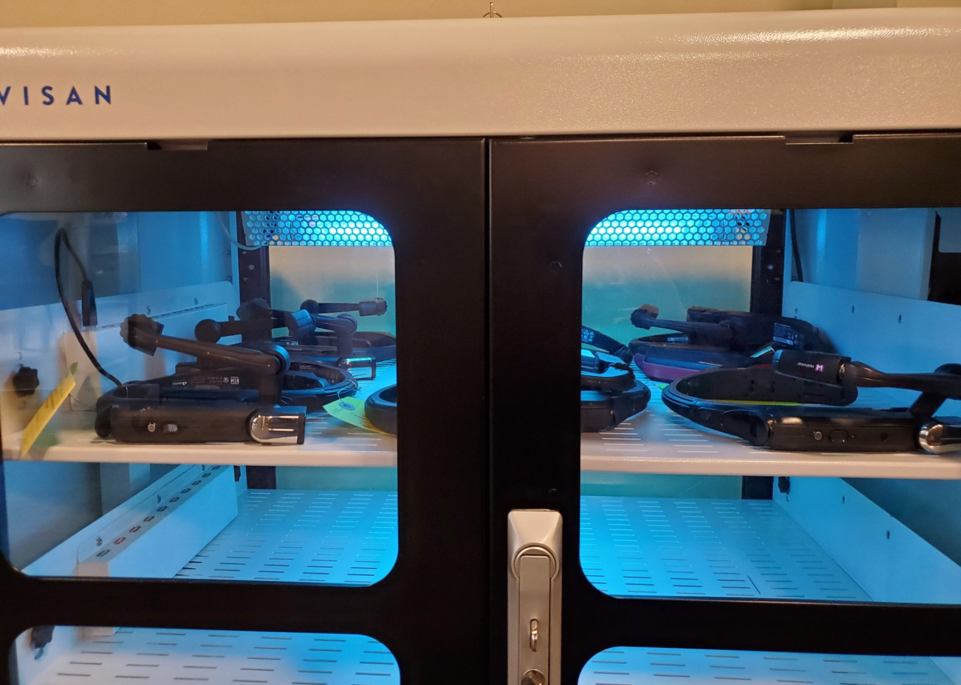
Realwear Reviews & Recommends Uvisan UV-C cabinets to sanitise its headsets

Wearable, Assisted-Reality specialists Realwear recently were kind enough to review a Uvisan UV Cabinet and provided a detailed and comprehensive report on the overall usability and findings when testing their Headsets.

In summary Realwear’s findings were:

  • Test simulates 6 cleaning cycles per day, 52 weeks per year, for 4 years.
  • No visible degradation to HMT – 1 devices after testing.
  • All devices remained in working order and passed drop tests after testing.
  • Realwear recommends Uvisan UV Cabinets for hygiene purposes for all Realwear devices at customers discretion.

About Realwear

RealWear’s assisted reality tools enable frontline workers to view and share documents, diagrams, photos, and video, all while keeping their hands and field of view free for the work. Leading software companies have optimized their applications, enabling workers to virtually connect and collaborate with remote experts as though working side by side, and to follow complex work procedures or remotely complete audits or inspections. Voice controlled, simple commands – even in high noise environments – allow workers to intuitively navigate critical applications, documentation, and functions. The only wearable purpose-built as ruggedized, RealWear is fully compatible with worker PPE (helmets, protective suits, ear protection and safety glasses), and features the only “all shift” battery life available. Professional grade and designed for commercial use, RealWear solutions fully integrate with enterprise-class software, security protocols, and with a variety of device management solutions.

Realwear were sent a Uvisan UV Cabinet to evaluate the effects on Realwear products and the results can be seen below.

HMT-1 Ultraviolet Exposure Test
Determining UVC effect on cosmetic degradation using Uvisan device
Realwear, Inc.

Abstract
Over the past year, multiple customers have been interested in using UV radiation to sanitize the HMT-1. Realwear needs to determine the cosmetic effects of long-term UVC exposure before providing a specific recommendation. Realwear is working with Uvisan, a company that designs commercial VR sterilization boxes used in sanitising VR, AR and MR headsets in VR arcades, training facilities, education facilities, retail kiosks, and other VR experiences and settings. Uvisan offers a range of UVC Cabinets for storing, charging and sanitising up to 30 headsets in 2 minutes.

Uvisan provided a material testing protocol, which notes that there have been no discoloration or physical degradation of any materials tested. To test our device, we first took high res photos of the cosmetic surfaces, and then used a Uvisan to expose the device for 144 hours of UV sanitising, equivalent to 6 cleanings per day, 52 weeks, for 4 years.

After comparing the before and after photos, we determined that the Uvisan UV Cabinet does not affect the cosmetic surfaces of the HMT-1 and recommend at the customers discretion. We also performed a post-UVC drop test according to the RW HMT-1 Drop Test Standard. The device passed with fully working physical and electrical components.


Introduction
Currently, when our customers need to sanitize the HMT-1, we recommend wiping the device using an alcohol solution. With the events of COVID-19, customers have expressed interest in using ultraviolet radiation to sanitize the device, although Realwear is unsure of the cosmetic effects on the materials. To research this further, we started working with providers of VR sterilization boxes used in VR arcades, training facilities, and retail kiosks, to setup a UVC exposure test. The goal of this experiment is to determine the level of cosmetic degradation that our new device (Codenamed: Archer) shows after four years of simulated exposure. Note that Uvisan claims “there have been no discoloration or physical degradation of any material tested”. We will also perform a drop test, to ensure that the HMT-1 remains rugged after UVC cleaning. 

Literature Review
Ultraviolet radiation in the UVC band has been used for decades to reduce the spread of bacteria. Recently, it has also been shown to destroy proteins in the SARS-Coronavirus. To effectively inactivate a virus, UVC radiation needs direct exposure to the surface, and so fabrics and foams are more difficult to sanitize than plastics.1 The HMT’s hard and non-porous materials (excluding the workband, rear pad, and overhead strap) are conducive for UVC sanitization, since the UVC radiation has direct exposure to surfaces and shallow crevices.

Theory
UVC lies in the band from 200 to 280 nanometers, and inactivates viruses and bacteria by interacting with the RNA and DNA molecules to render the microbes non-infectious (Uvisan cabinets use specifically 254 nanometers). Unlike UVA/UVB produced by the sun, UVC is a shorter wavelength with different properties that does not noticeably degrade or damage electronics, plastics, lenses, or other materials commonly used in VR headset construction.3 Since the HMT-1 is a full shift device, we assume that it will be used at most during a 24 hour work day, comprised of three 8 hour shifts. Exposing the device to UVC radiation for 1 minute, 3 times a day, for four years of use results in 4380 minutes of exposure over the devices lifetime. Using a 2x factor of safety, we tested this device for 8640 minutes, 6 days of continuous exposure. By simulating four years of exposure, we will be determine UVC cosmetic effects on the HMT-1.

Experiment
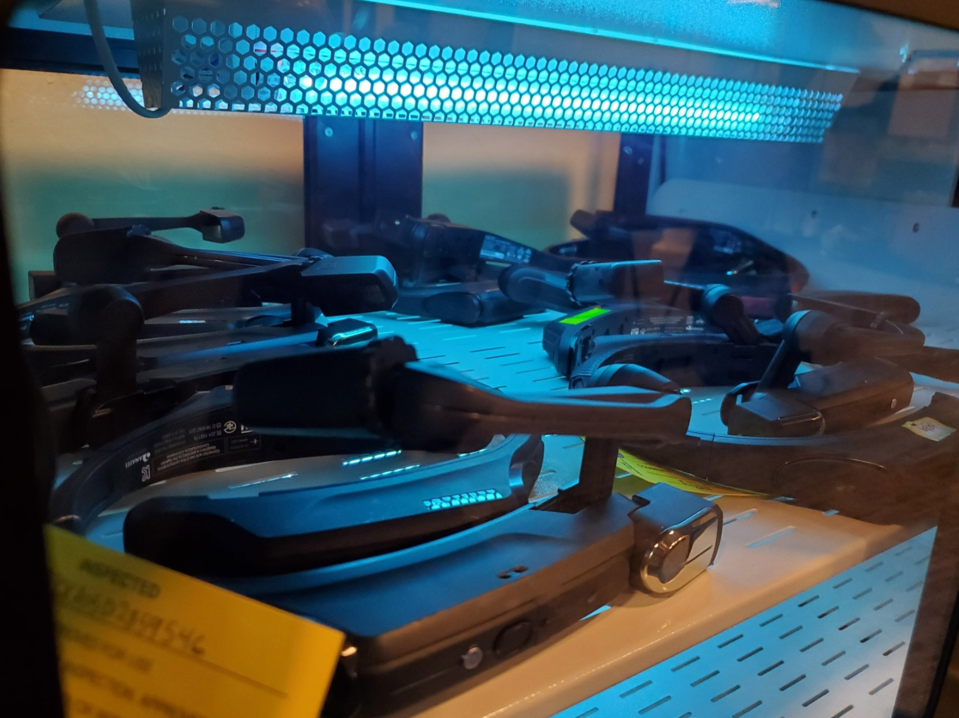
We setup the experiment using the Uvisan cabinet provided.  We photographed the Archer device, photographing the main cavity body, rear rubber frame, display pod, rubber parts, and other detail areas. We placed the device into the test chamber, and exposed it to UVC radiation for 144 hours. After completing the test, we took a full set of high resolution before and after photos.

UVC Procedure

  • Take close-up, high-res pictures of all surfaces on the materials you wish to test before you start the test.
  • Wire an external power supply to each UVC light bank to bypass the Uvisan’s internal timer. 
  • Place the device into the Uvisan and turn on the UVC lights. Note: make sure the Uvisan is in an isolated area, where it won’t get disturbed or moved.
  • After 144 hours (6 days) have elapsed, turn off the Uvisan, remove the device, and take another full set of pictures.
  • Analyse the before and after images for discolouration or material breakdown. Run your hand across the material to see if the material feels any different from the original materials.

Drop Test Procedure

Test Case Description

  • Total of 12 drops at 2 meters distance on the ground when powered on state in different angles.
  • Test Height: 2.0m (Target to meet)
  • Test Position: total drop 12 times from different angles
  • Device is powered ON state
  • Must record the dropping angle for any failure

Pass / Fail Criteria

  • Fully functional
  • No change in mechanical/PCB condition
  • No change in electrical/functional performance
  • Very minor dents, scratches or paint removal are permitted
  • Slight case/cover opening is permitted, if it can be easily readjusted by hand
  • External component (battery cover/battery) separation from device is NOT permitted
  • Acceptable if observed defect disappears after readjustment and reset

Data Analysis

A full image gallery showing images of the Realwear HMT-1 before  UVC exposure and after 144 hours of UVC exposure is available on the Uvisan web site here.

After analyzing the high-resolution macro before and after photos, there is negligible-to-no difference in the surface finishes. The HMT-1 passes the cosmetic test for UVC exposure. 

The drop test passed according to the Realwear 2m drop test standards.

Summary

After 144 hours of exposure to UVC radiation, the HMT-1 shows no apparent degradation of any material. UVC cleaning can be performed at the customers discretion without damaging the HMT-1 hardware or materials. UV cleaning using Uvisan is a viable solution that will not physically damage the device. We also performed a post-UVC drop test according to the Realwear 2m drop test standard. The UVC device passed, with no physical damage, and fully working electronics.

Realwear are now confident that the UV Cabinets are suitable for all products in the Realwear range and recommend the products to be used at the customers discretion.

Menzies Health Institute uses UviPortable to Disinfect VR Headsets – Testimonial

“UviPortable gives peace of mind that I am employing best practice. We can inform participants that we have done everything possible to minimise risk, which helps ensure success for our endeavours.” Dr David Painter

Dr David Painter is a Research Fellow at Griffith University on the Gold Coast in QLD. His team’s project uses virtual reality (VR) in inpatient rehabilitation settings to assess cognitive performance in people with brain injury. VR provides opportunities for people to practice cognitive skills in naturalistic ways that promote recovery.

Working in a frontline setting impacted by the pandemic, David and his team were looking for methods to ensure that the VR headsets and controllers were sufficiently cleaned. They use hospital disinfectant but require additional security. “Dealing with vulnerable people requires certainty that transmission risks are minimised. The deleterious consequences of pathogens require safe methods that we can rely on. UV technology helps to minimise risk for both participants and our project.”

UV disinfection came up consistently in online searches as an effective method. For David, an added benefit was supporting local industry. “Australia currently outsources biotechnology development to other countries. We should help to support and help build local industries, which provides the added benefits of a quick turnaround on delivery and low shipping costs.”

David says unboxing and using the UviPortable is simple. “It is plug and play. The unit is well-packaged and simple to use and comes with an instruction manual. The carry handle made the unit convenient to remove from the box and set in place. It comes with a standard power cable. All I needed to do was plug it in and press the button. We had a testing session scheduled at 9am, and the unit was quickly unboxed and ready to run. The unit seems robust, well-constructed, and unlikely to break or mark easily.”

“I am part of the local VR community, and I share my experience with others who require that transmission risk is minimised. It only takes 90 seconds for the disinfection cycle, which makes it fast to disinfect our devices between participants.”

“I have been using the UviPortable for a few weeks and have peace of mind that I am employing best practice. We can inform participants that we have done everything possible to minimise risk. This helps to ensure success for our endeavours.”

Scroll to top